
5G and the Future of Live Broadcasting
What if a live concert in Riyadh could be streamed in full 8K with zero lag, to audiences in Dubai, Cairo and London, without relying on traditional satellites? This is no longer science fiction. With 5G rolling out at scale, live broadcasting is entering a future defined by speed, interactivity and storytelling possibilities we’ve never had before.
For broadcasters in the UAE and Saudi Arabia, 5G is more than a technical upgrade. It is the backbone of next-generation media, powering everything from hologram storytelling to virtual production and XR in broadcast. Let’s look at why this matters and how it is reshaping the industry in the MENA region.
For broadcasters in the UAE and Saudi Arabia, 5G is more than a technical upgrade. It is the backbone of next-generation media, powering everything from hologram storytelling to virtual production and XR in broadcast. Let’s look at why this matters and how it is reshaping the industry in the MENA region.
The Power of 5G for Broadcasters
Unlike 4G, which was built for consumers, 5G is engineered for industries. For broadcasters, the key benefits are:
• Ultra-low latency: Sub-second response times make real-time interaction seamless. That means live sports, newsrooms, and events can operate with virtually no delay.
• Massive bandwidth: Support for ultra-HD streams and 360-degree video.
• Network slicing: Broadcasters can reserve “slices” of the network for their events, guaranteeing reliability.
• Mobility at scale: From drones capturing live feeds in Abu Dhabi to mobile rigs in Jeddah, 5G supports broadcasting on the move.
According to Ericsson’s 2025 Mobility Report, 5G subscriptions in the GCC are expected to reach 80% of all mobile connections by 2028, making this one of the world’s fastest adoption curves.
• Ultra-low latency: Sub-second response times make real-time interaction seamless. That means live sports, newsrooms, and events can operate with virtually no delay.
• Massive bandwidth: Support for ultra-HD streams and 360-degree video.
• Network slicing: Broadcasters can reserve “slices” of the network for their events, guaranteeing reliability.
• Mobility at scale: From drones capturing live feeds in Abu Dhabi to mobile rigs in Jeddah, 5G supports broadcasting on the move.
According to Ericsson’s 2025 Mobility Report, 5G subscriptions in the GCC are expected to reach 80% of all mobile connections by 2028, making this one of the world’s fastest adoption curves.
UAE and Saudi Arabia: Leading the Shift
The MENA region is not waiting. Both the UAE and Saudi Arabia are already positioning 5G as a strategic lever for media transformation:
• Dubai Media City is piloting 5G-enabled broadcast workflows with international partners. These projects focus on combining virtual production with 5G live broadcasting for advertising and entertainment.
• Saudi Arabia’s Vision 2030 includes investments in immersive media experiences, where hologram storytelling and XR are expected to become part of cultural and sporting events. For instance, during Riyadh Season, 5G networks supported interactive fan experiences that blended live concerts with XR overlays.
• Broadcasters in Abu Dhabi are testing 5G-powered cloud production, reducing dependency on physical studios and cutting costs tied to satellite links.
These examples highlight how the Gulf is leapfrogging traditional broadcast models and becoming a testbed for new innovations.
• Dubai Media City is piloting 5G-enabled broadcast workflows with international partners. These projects focus on combining virtual production with 5G live broadcasting for advertising and entertainment.
• Saudi Arabia’s Vision 2030 includes investments in immersive media experiences, where hologram storytelling and XR are expected to become part of cultural and sporting events. For instance, during Riyadh Season, 5G networks supported interactive fan experiences that blended live concerts with XR overlays.
• Broadcasters in Abu Dhabi are testing 5G-powered cloud production, reducing dependency on physical studios and cutting costs tied to satellite links.
These examples highlight how the Gulf is leapfrogging traditional broadcast models and becoming a testbed for new innovations.
New Possibilities for Storytelling
The story is no longer about transmitting video. It is about creating immersive experiences:
• Hologram Storytelling: Imagine an anchor in Dubai appearing in a Saudi studio via hologram, interacting naturally with the audience in real-time.
• XR in Broadcast: Sports broadcasters can overlay stats, maps, and player data into live games without delay.
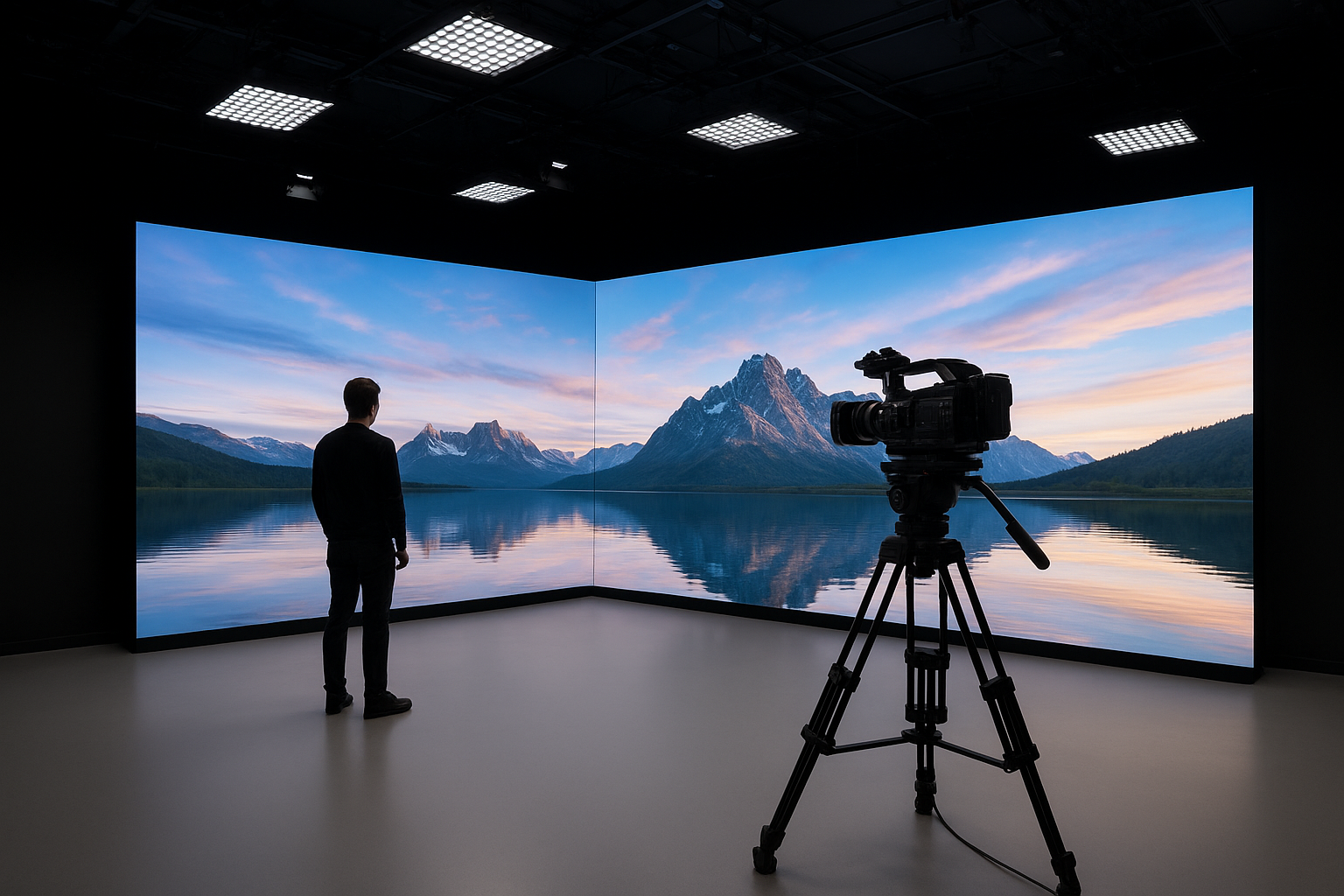
• Virtual Production: Studios can run leaner by replacing physical sets with LED walls and 5G-connected virtual assets.
This shift also changes the economics. A regional broadcaster that once needed expensive trucks and satellite feeds can now deliver the same or better quality using compact 5G-enabled kits.
• Hologram Storytelling: Imagine an anchor in Dubai appearing in a Saudi studio via hologram, interacting naturally with the audience in real-time.
• XR in Broadcast: Sports broadcasters can overlay stats, maps, and player data into live games without delay.
• Virtual Production: Studios can run leaner by replacing physical sets with LED walls and 5G-connected virtual assets.
This shift also changes the economics. A regional broadcaster that once needed expensive trucks and satellite feeds can now deliver the same or better quality using compact 5G-enabled kits.
Challenges and Ethics
With opportunity comes responsibility. Media AI ethics and regulation will be crucial as 5G merges with AI and XR. Issues include:
• Data privacy: More connected devices mean more audience data.
• Content authenticity: As holograms and XR grow, keeping audiences informed about what is “real” and what is generated will be key.
• Infrastructure gaps: Not every MENA market is ready. Rural coverage still lags behind urban centers.
Still, early adoption in the UAE and Saudi Arabia is pushing the region toward becoming a global leader in 5G live broadcasting.
• Data privacy: More connected devices mean more audience data.
• Content authenticity: As holograms and XR grow, keeping audiences informed about what is “real” and what is generated will be key.
• Infrastructure gaps: Not every MENA market is ready. Rural coverage still lags behind urban centers.
Still, early adoption in the UAE and Saudi Arabia is pushing the region toward becoming a global leader in 5G live broadcasting.
Conclusion
5G is not just about faster downloads. For broadcasters in the MENA region, it’s a pathway to new forms of storytelling, efficiency, and audience engagement. From Riyadh’s live events to Dubai’s virtual studios, the next generation of broadcast is being built on 5G.
For broadcasters and media leaders, the question is no longer “if” but “how fast” they can adapt. Those who embrace XR in broadcast, hologram storytelling, and virtual production today will shape the media experiences of tomorrow.
For broadcasters and media leaders, the question is no longer “if” but “how fast” they can adapt. Those who embrace XR in broadcast, hologram storytelling, and virtual production today will shape the media experiences of tomorrow.