
Imagine watching a concert in Riyadh where the performer appears as a life-sized hologram, standing just meters away, even though they are performing live from Los Angeles.
This is no longer science fiction. Thanks to advances in hologram storytelling, XR in broadcast, virtual production, and 5G live broadcasting, the media industry is entering a new chapter. The way stories are told and the way audiences connect with them, is changing at lightning speed. And in the UAE and Saudi Arabia, these innovations are not just experiments, they are becoming strategic priorities.
Holograms and the Return of Presence
Holograms bring back what digital media often lacks: presence. In 2024, Dubai’s Expo City hosted a holographic keynote featuring an international speaker who couldn’t attend in person. Audiences described the experience as “realer than Zoom, more engaging than pre-recorded video.”
Globally, the hologram market is projected to surpass $11 billion by 2032 (Fortune Business Insights), fueled by entertainment, education, and corporate events. For broadcasters, this means new ways to captivate audiences. Imagine news anchors interacting with holographic guests in real time, or MENA sports networks bringing global athletes “into the studio” for instant interviews.
For Saudi Arabia, this aligns perfectly with Vision 2030’s investment in mega-events and smart cities. NEOM’s planned immersive media districts will likely be among the first to embed holographic storytelling into daily broadcasting.
Globally, the hologram market is projected to surpass $11 billion by 2032 (Fortune Business Insights), fueled by entertainment, education, and corporate events. For broadcasters, this means new ways to captivate audiences. Imagine news anchors interacting with holographic guests in real time, or MENA sports networks bringing global athletes “into the studio” for instant interviews.
For Saudi Arabia, this aligns perfectly with Vision 2030’s investment in mega-events and smart cities. NEOM’s planned immersive media districts will likely be among the first to embed holographic storytelling into daily broadcasting.
XR in Broadcast: Expanding the Studio Beyond Its Walls
Extended Reality (XR) is already redefining what a studio looks like. Instead of building physical sets, broadcasters are now creating virtual stages where backdrops can change instantly. With XR, a weather presenter in Abu Dhabi can appear to be walking through a storm system, or a sports commentator in Riyadh can break down plays on a holographic pitch.
A report by PwC predicts that XR technologies could contribute $1.5 trillion to the global economy by 2030. In MENA, broadcasters are investing heavily. For instance, UAE-based media hubs are piloting XR-driven shows that cut set costs while giving producers creative freedom.
XR also supports sustainability. By replacing physical builds with virtual sets, studios reduce material waste and energy use. This links storytelling innovation with eco-friendly production — a win for both creativity and the planet.
A report by PwC predicts that XR technologies could contribute $1.5 trillion to the global economy by 2030. In MENA, broadcasters are investing heavily. For instance, UAE-based media hubs are piloting XR-driven shows that cut set costs while giving producers creative freedom.
XR also supports sustainability. By replacing physical builds with virtual sets, studios reduce material waste and energy use. This links storytelling innovation with eco-friendly production — a win for both creativity and the planet.
Virtual Production: Hollywood Meets MENA
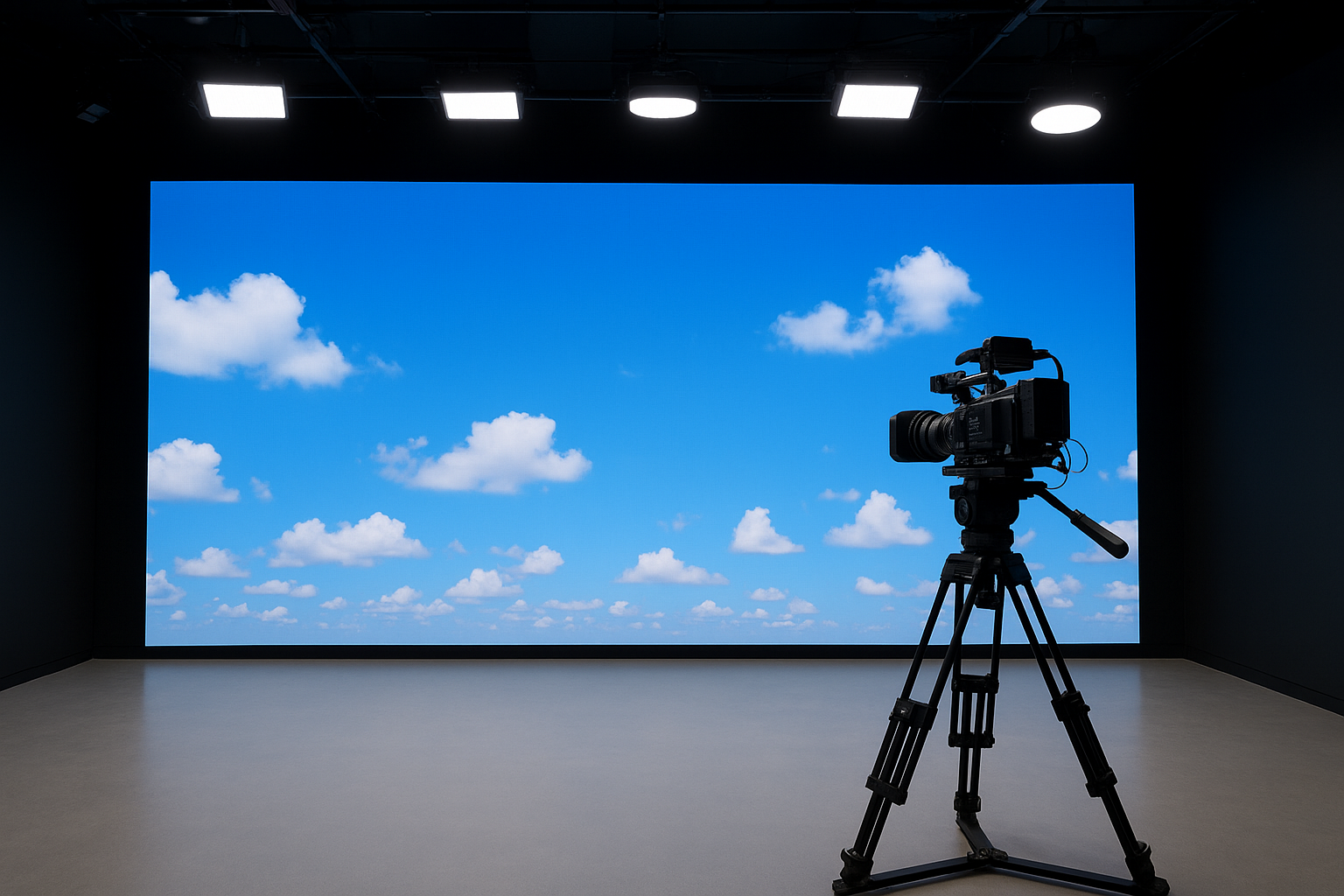
Virtual production, made famous by The Mandalorian, is now entering regional markets. Using massive LED walls and real-time rendering engines, producers can place actors in hyper-realistic environments without ever leaving the studio.
Dubai Media City has already hosted training sessions for local production crews, while Saudi’s NEOM is building soundstages equipped with cutting-edge LED volumes. These investments mean that storytellers in MENA can compete on a global scale without flying to Hollywood.
Virtual production is not only visually impressive, it is cost-effective. Research from Deloitte shows that studios using virtual production cut filming costs by up to 30%, while speeding up timelines. This opens doors for Arabic-language dramas, cultural documentaries, and branded content that can rival international productions.
Dubai Media City has already hosted training sessions for local production crews, while Saudi’s NEOM is building soundstages equipped with cutting-edge LED volumes. These investments mean that storytellers in MENA can compete on a global scale without flying to Hollywood.
Virtual production is not only visually impressive, it is cost-effective. Research from Deloitte shows that studios using virtual production cut filming costs by up to 30%, while speeding up timelines. This opens doors for Arabic-language dramas, cultural documentaries, and branded content that can rival international productions.
5G Live Broadcasting: Speed Unlocks Creativity
None of this would be possible without connectivity. 5G live broadcasting is enabling seamless hologram transmissions, real-time XR effects, and remote virtual production. With its ultra-low latency, 5G ensures that live concerts, news coverage, and sporting events can integrate holographic or XR elements without delays.
In the UAE, telecom operators are partnering with broadcasters to pilot 5G-powered live events. Saudi Arabia, one of the top global adopters of 5G, is testing immersive fan experiences for football matches, from real-time holographic replays to interactive XR overlays during live streams.
The combination of 5G and immersive technologies is building a new media language. It’s not just about telling stories, but about placing audiences inside them.
In the UAE, telecom operators are partnering with broadcasters to pilot 5G-powered live events. Saudi Arabia, one of the top global adopters of 5G, is testing immersive fan experiences for football matches, from real-time holographic replays to interactive XR overlays during live streams.
The combination of 5G and immersive technologies is building a new media language. It’s not just about telling stories, but about placing audiences inside them.
The Next Era of Storytelling
So what does all this mean for creators, broadcasters, and audiences?
• For creators: More tools to craft immersive narratives that blur the lines between real and virtual.
• For broadcasters: Opportunities to lower costs while raising production value with XR in broadcast and virtual sets.
• For audiences: A more personal, participatory experience from attending concerts via hologram to engaging with virtual sports analysis in real time.
The UAE and Saudi Arabia are positioning themselves as global leaders in this new media era. By investing early in hologram storytelling, XR, and virtual production, they are shaping not just regional media, but the future of global storytelling.
• For creators: More tools to craft immersive narratives that blur the lines between real and virtual.
• For broadcasters: Opportunities to lower costs while raising production value with XR in broadcast and virtual sets.
• For audiences: A more personal, participatory experience from attending concerts via hologram to engaging with virtual sports analysis in real time.
The UAE and Saudi Arabia are positioning themselves as global leaders in this new media era. By investing early in hologram storytelling, XR, and virtual production, they are shaping not just regional media, but the future of global storytelling.
Conclusion
Holograms, XR, and 5G are not gimmicks. They are the foundation of the next era of storytelling. What was once limited to Hollywood blockbusters is now within reach for broadcasters in Dubai, Riyadh, and beyond. The coming years will redefine what audiences expect from media: not just to watch stories unfold, but to step inside them.
The question is no longer “will this technology arrive?” It already has. The real question is: who will use it best?
The question is no longer “will this technology arrive?” It already has. The real question is: who will use it best?