
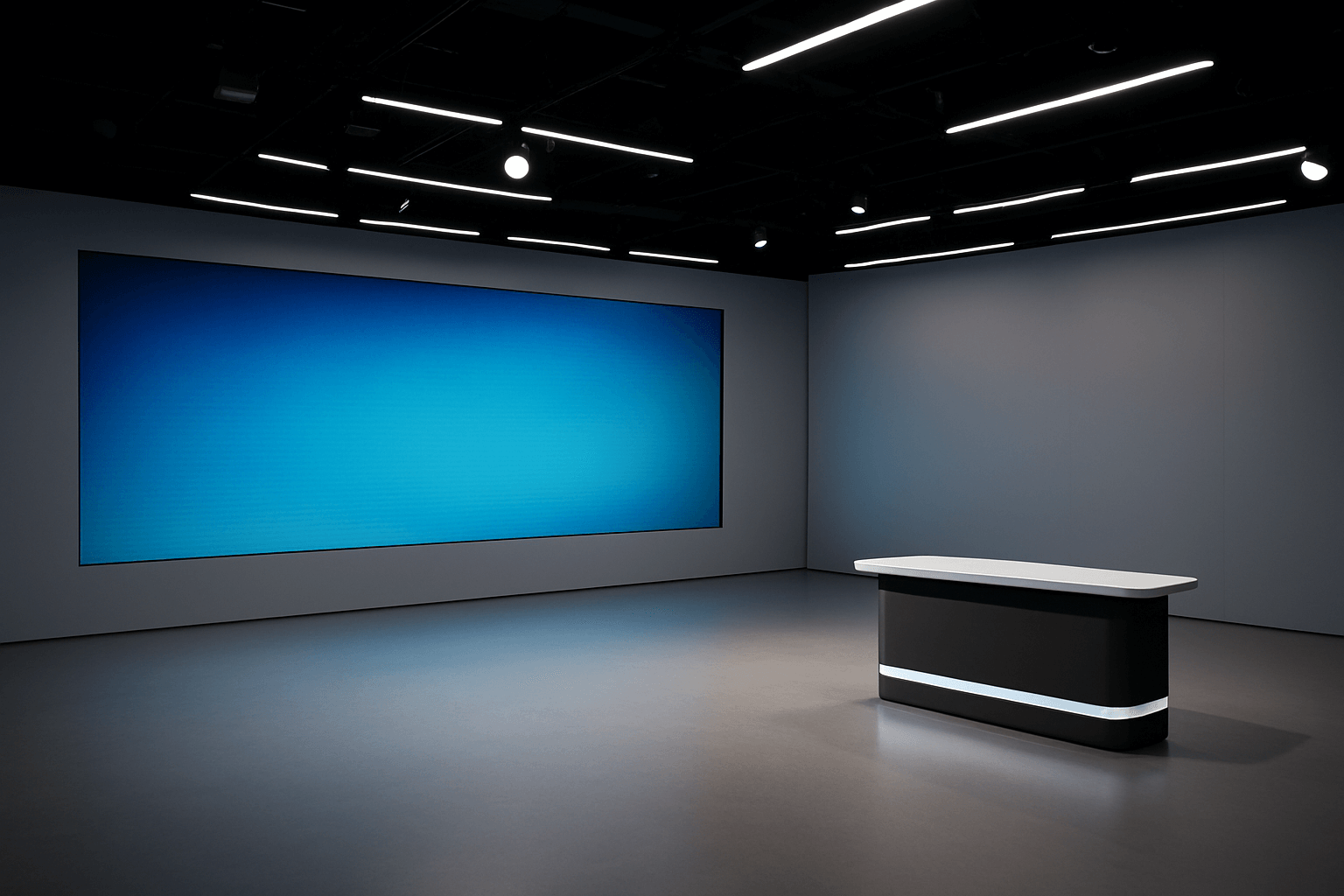
What if the biggest transformation in broadcasting wasn’t about content, but about the walls around it?
In 2025, the conversation about media innovation often revolves around AI, XR, and cloud workflows. Yet one of the most disruptive changes shaping the future of broadcasting is happening inside the studio itself: the rise of LED technology.
Across the UAE, Saudi Arabia, and the wider MENA region, broadcasters are shifting from traditional green screens and heavy lighting rigs to LED studios. It is not only a creative upgrade, but also a decisive step toward sustainable media and eco-friendly broadcasting.
Across the UAE, Saudi Arabia, and the wider MENA region, broadcasters are shifting from traditional green screens and heavy lighting rigs to LED studios. It is not only a creative upgrade, but also a decisive step toward sustainable media and eco-friendly broadcasting.
The Case for LED Studios
Why are LED studios winning? It comes down to three forces reshaping the industry: cost, creativity and carbon.
• Cost Efficiency: LED walls eliminate many of the hidden costs tied to traditional studios. Once installed, they reduce the need for location shoots, heavy set builds, and hours of post-production.
• Creative Freedom: Virtual production powered by LED walls allows directors and producers to create photorealistic environments in real time, from Riyadh’s deserts to Dubai’s skyline, without leaving the studio.
• Sustainability: Perhaps the strongest argument. LED studios consume less energy, cut down on physical waste, and dramatically reduce travel-related emissions, making them the backbone of green production.
According to a 2024 Deloitte report, switching to LED-based virtual production can reduce a studio’s carbon footprint by up to 40 percent compared to traditional workflows.
• Cost Efficiency: LED walls eliminate many of the hidden costs tied to traditional studios. Once installed, they reduce the need for location shoots, heavy set builds, and hours of post-production.
• Creative Freedom: Virtual production powered by LED walls allows directors and producers to create photorealistic environments in real time, from Riyadh’s deserts to Dubai’s skyline, without leaving the studio.
• Sustainability: Perhaps the strongest argument. LED studios consume less energy, cut down on physical waste, and dramatically reduce travel-related emissions, making them the backbone of green production.
According to a 2024 Deloitte report, switching to LED-based virtual production can reduce a studio’s carbon footprint by up to 40 percent compared to traditional workflows.
Market Momentum: Global and MENA
Globally, the market for LED production is surging. Research from Markets and Markets projects the LED video wall industry to reach USD 36 billion by 2030, driven largely by entertainment, advertising and news broadcasting.
In MENA, the adoption is accelerating faster than most expected:
• UAE: Dubai Media City has supported pilots for LED-based production suites, enabling regional broadcasters to scale up without flying crews across continents.
• Saudi Arabia: The Kingdom’s Vision 2030 program has fueled massive investments in media infrastructure. NEOM’s Oxagon and Trojena projects are being built with sustainability-first broadcasting hubs that prioritize carbon footprint studios.
• Wider MENA: Smaller Gulf broadcasters are following suit, partnering with global technology vendors to retrofit existing studios with LED walls.
The message is clear: LED studios are no longer niche—they are mainstream.
In MENA, the adoption is accelerating faster than most expected:
• UAE: Dubai Media City has supported pilots for LED-based production suites, enabling regional broadcasters to scale up without flying crews across continents.
• Saudi Arabia: The Kingdom’s Vision 2030 program has fueled massive investments in media infrastructure. NEOM’s Oxagon and Trojena projects are being built with sustainability-first broadcasting hubs that prioritize carbon footprint studios.
• Wider MENA: Smaller Gulf broadcasters are following suit, partnering with global technology vendors to retrofit existing studios with LED walls.
The message is clear: LED studios are no longer niche—they are mainstream.
The Sustainability Edge
For broadcasters, LED studios are not just a technology upgrade. They are a strategic response to the growing demand for eco-friendly broadcasting.
Here is how LED studios deliver sustainability benefits:
• Lower Energy Use: LED panels consume significantly less energy than traditional lighting and set rigs.
• Reduced Travel: Virtual backdrops cut the need to fly crews to far-flung locations, slashing emissions.
• Less Physical Waste: Fewer set builds and disposable props mean less waste heading to landfills.
• Efficient Workflows: With real-time virtual production, editors spend less time in post-production, reducing server and processing loads.
In Dubai, a broadcaster piloting LED studio workflows for a weekly talk show reported a 30 percent reduction in overall production costs and a measurable cut in electricity bills. In Riyadh, a sports channel used LED-based production for live coverage, reducing both energy consumption and turnaround times.
Here is how LED studios deliver sustainability benefits:
• Lower Energy Use: LED panels consume significantly less energy than traditional lighting and set rigs.
• Reduced Travel: Virtual backdrops cut the need to fly crews to far-flung locations, slashing emissions.
• Less Physical Waste: Fewer set builds and disposable props mean less waste heading to landfills.
• Efficient Workflows: With real-time virtual production, editors spend less time in post-production, reducing server and processing loads.
In Dubai, a broadcaster piloting LED studio workflows for a weekly talk show reported a 30 percent reduction in overall production costs and a measurable cut in electricity bills. In Riyadh, a sports channel used LED-based production for live coverage, reducing both energy consumption and turnaround times.
Audience and Industry Perception
Sustainability is not only about cost savings. In a region where Vision 2030 and Vision 2050 shape national strategies, embracing sustainable media also strengthens credibility with governments, investors, and audiences.
Audiences today, especially Gen Z and millennials are vocal about sustainability. Research by PwC shows that over 70 percent of MENA youth prefer brands that demonstrate eco-conscious practices. For broadcasters, moving to LED studios is not just operationally smart; it is also a public statement that aligns with regional priorities.
Audiences today, especially Gen Z and millennials are vocal about sustainability. Research by PwC shows that over 70 percent of MENA youth prefer brands that demonstrate eco-conscious practices. For broadcasters, moving to LED studios is not just operationally smart; it is also a public statement that aligns with regional priorities.
What’s Next for LED Studios in the GCC
Looking ahead, the growth of LED studios will be amplified by other technologies:
• AI media workflows that automate lighting and scene adjustments.
• 5G live broadcasting enabling seamless integration of remote feeds into virtual sets.
• XR in broadcast blending physical and digital storytelling to engage audiences in new ways.
As these tools converge, LED studios will become the central hub for sustainable, immersive, and scalable broadcasting across the MENA region.
• AI media workflows that automate lighting and scene adjustments.
• 5G live broadcasting enabling seamless integration of remote feeds into virtual sets.
• XR in broadcast blending physical and digital storytelling to engage audiences in new ways.
As these tools converge, LED studios will become the central hub for sustainable, immersive, and scalable broadcasting across the MENA region.
Conclusion
LED studios are not just winning in 2025, they are redefining broadcasting. They cut costs, unlock creative possibilities, and most importantly, support green production goals that align with the UAE’s and Saudi Arabia’s national visions.
For broadcasters in the Gulf, the transition is no longer optional. The global market is moving toward sustainability, and LED technology is at the center of that shift. The winners will be those who embrace this transformation early, proving that the future of media can be both innovative and eco-friendly.
For broadcasters in the Gulf, the transition is no longer optional. The global market is moving toward sustainability, and LED technology is at the center of that shift. The winners will be those who embrace this transformation early, proving that the future of media can be both innovative and eco-friendly.