
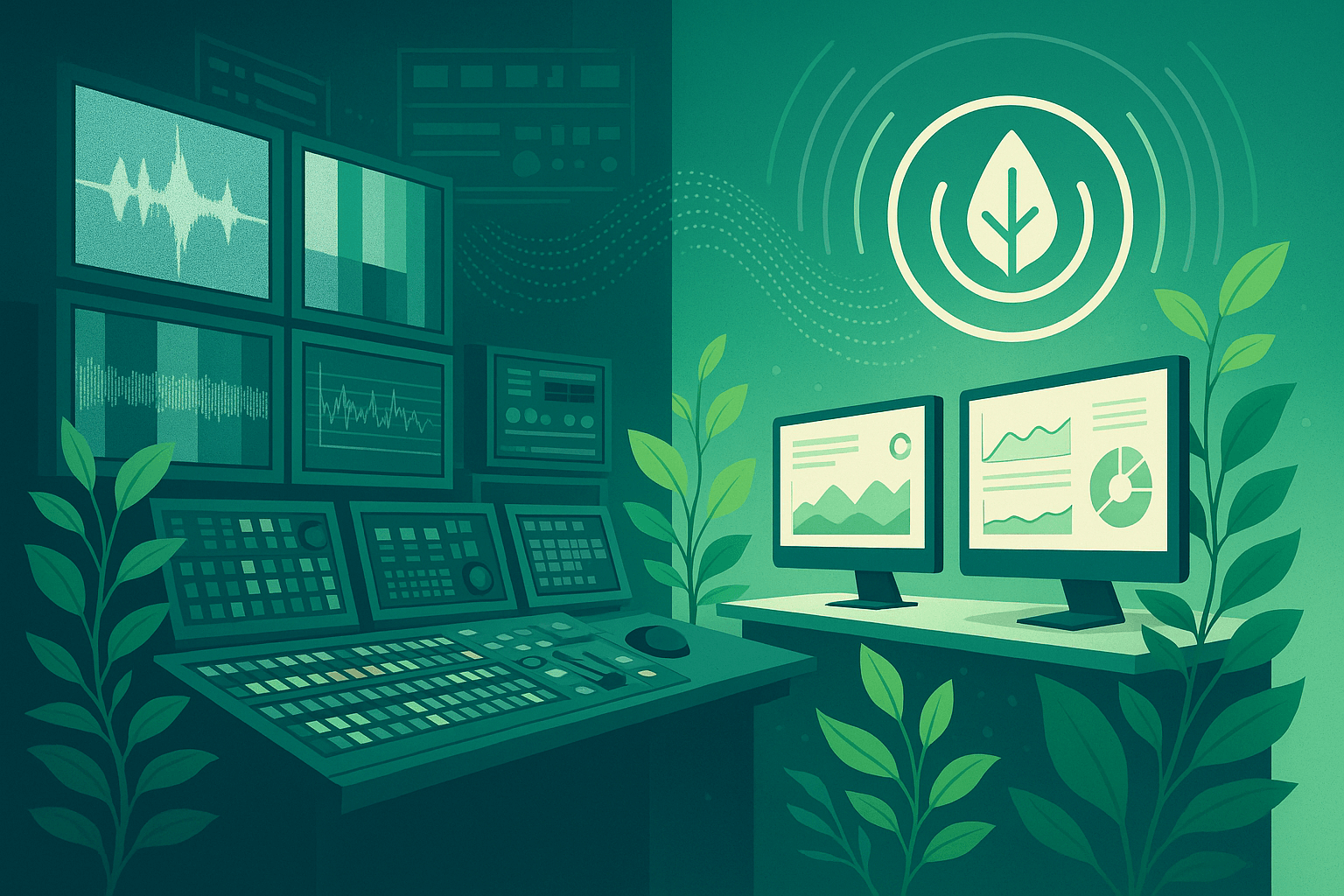
Exploring the overlooked environmental impact of media production and why the industry must prioritize sustainable transformation now.
The media industry has always been a powerful force in shaping narratives, influencing culture, and driving innovation. But when it comes to sustainability, this same industry is falling behind. While conversations around eco-consciousness have become mainstream in fashion, transport, and energy, media companies have been slower to reflect on their environmental footprint.
The Hidden Impact of Media Operations
Broadcast networks, production studios, and digital content platforms consume massive energy, from data centers powering streaming services to high-intensity lighting and hardware-heavy studios. Add to that the constant need for travel, temporary set construction, and electronic waste from outdated equipment, and the picture becomes clearer: the media industry is resource-intensive, and its environmental cost is significant.
Yet, sustainability has not become a strategic priority for most media organizations. Why?
Yet, sustainability has not become a strategic priority for most media organizations. Why?
What's Lacking?
1. Awareness and Transparency
Few media companies publish sustainability reports or track carbon usage across their workflows. Without measurement, there can be no meaningful action.
2. Sustainable Infrastructure Planning
Many studios and control rooms are designed for maximum output, not minimum impact. Energy efficiency, modular upgrades, and green alternatives are rarely considered in initial planning stages.
3. Eco-Conscious Procurement
The use of single-use set materials, non-recyclable props, and excessive packaging continues without evaluation. The procurement process is rarely tied to sustainability goals.
4. Digital Waste
As media moves to the cloud, the energy demands of data storage, live streaming, and 24/7 content delivery also rise. Few companies optimize for low-energy encoding, efficient content delivery networks (CDNs), or responsible archiving.
5. Leadership Accountability
Sustainability is often seen as a CSR checkbox instead of a leadership-driven operational goal. This mindset needs to change, starting from the top.
Few media companies publish sustainability reports or track carbon usage across their workflows. Without measurement, there can be no meaningful action.
2. Sustainable Infrastructure Planning
Many studios and control rooms are designed for maximum output, not minimum impact. Energy efficiency, modular upgrades, and green alternatives are rarely considered in initial planning stages.
3. Eco-Conscious Procurement
The use of single-use set materials, non-recyclable props, and excessive packaging continues without evaluation. The procurement process is rarely tied to sustainability goals.
4. Digital Waste
As media moves to the cloud, the energy demands of data storage, live streaming, and 24/7 content delivery also rise. Few companies optimize for low-energy encoding, efficient content delivery networks (CDNs), or responsible archiving.
5. Leadership Accountability
Sustainability is often seen as a CSR checkbox instead of a leadership-driven operational goal. This mindset needs to change, starting from the top.
The Opportunity Ahead
The future of media lies in innovation with responsibility. Embracing sustainability isn’t just about saving the planet, it’s about staying relevant in a world where consumers, partners, and regulators expect accountability.
Virtual production can reduce physical resource usage.
Remote workflows can cut travel emissions.
Smart automation can optimize power consumption.
LED walls and energy-efficient lighting can reduce studio loads.
There is enormous potential to reimagine how media is made, distributed, and consumed, but it requires a shift in both mindset and operations
Virtual production can reduce physical resource usage.
Remote workflows can cut travel emissions.
Smart automation can optimize power consumption.
LED walls and energy-efficient lighting can reduce studio loads.
There is enormous potential to reimagine how media is made, distributed, and consumed, but it requires a shift in both mindset and operations
NeurixMedia's Commitment
At NeurixMedia, sustainability isn’t an afterthought, it’s part of our mission. As a forward-looking media technology company, we design systems and consult strategies that support greener, leaner, and smarter broadcast environments.
We believe that responsible media is not optional, it’s essential.
We believe that responsible media is not optional, it’s essential.